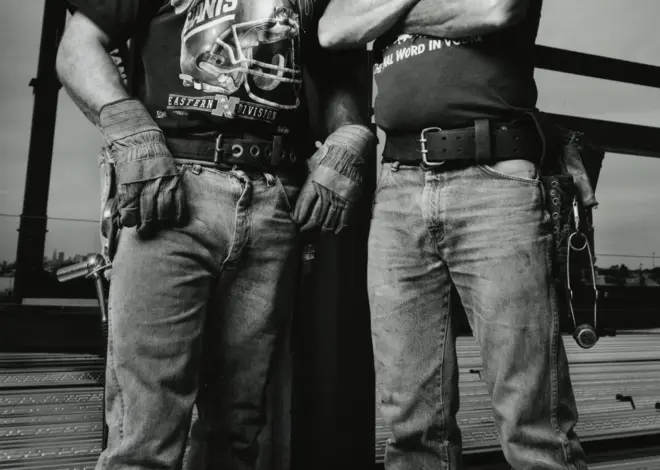
The Firefighters of 9/11
The following article appeared in the Oct. 25, 2001, issue of Rolling Stone.
T
he skittish cabbie, at Twelfth Street and Broadway, rolled down his window to size up the man on the corner wearing running shoes, a tan and a Vandyke. “I’ll take you uptown, but I’m not going anywhere near downtown,” he said. The second tower of the world Trade Center had collapsed a couple of minutes before, at 10:28 a.m., and nobody could predict what would happen next.
Read more ‘You People’ Did This: Living in Fear After 9/11
“I’m a fireman,” Jay Comella said. “Can you get me as close as you can?” Watching the spray of flames and the boiling smoke, the hack hesitated for a moment. “All right. OK. Get in.”
Fate. Luck. Divine intervention. Firemen rely on all of them, at different times and in different measure. One of those forces, Comella was sure, had landed him in the back of this taxi. Here he was, twelve years on the job with the fire department in Oakland, California, headed for a conflagration that would claim more than 300 firefighters, a fire far more deadly than any fought by his father, uncle or grandfather, firefighters all, beginning in 1928. All because he’d decided to stay a few extra days with his girlfriend, Jill Fagin, a home-furnishings designer with a shop in Greenwich Village, two miles from what would become known as Ground Zero.
Comella sat back uncomfortably. Every block felt like miles, and the pure blue sky seemed like a mocking backdrop to something it was probably too early to imagine — a new era of fear and purposefulness in which children would worry if their parents went to work in buildings that rose more than fifty or sixty stories high.
Comella paid his fare at Canal Street — the driver would go no farther — and walked south on west Broadway, a thoroughfare of million-dollar lofts, to a point three blocks from the Trade Center. Up and down the street, cars were burning — police cars, trucks, buses, postal vans, delivery vans, even a fire engine. A team of firefighters wrestled to advance a two-and-a-half-inch hose line, one of the largest attack hand lines that fire departments have in their arsenal. Comella jumped on the hose and held on tight.
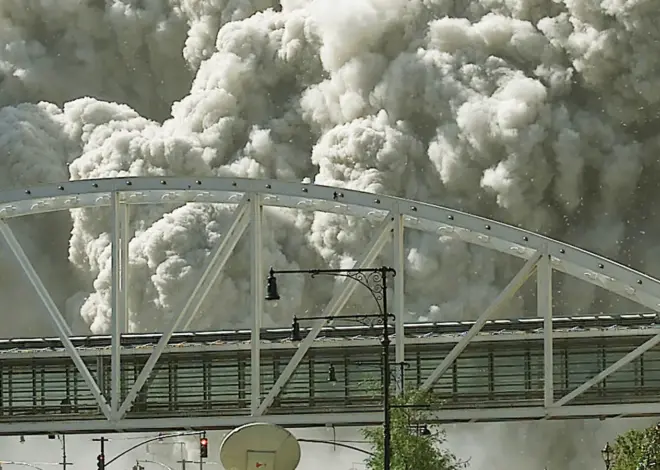
The scene around him seemed like a Bruce Willis picture, one of the Die Hard movies, or newsreels he’d seen of the Germans bombing London. Jets of water leapt from the thick, brown hose, 266 gallons per minute. “We worked our way down those three blocks to get to the Trade Center, stopped and rested,” says Comella. “Then I made my way over to the area between the World Trade Center and the World Financial Center. There was a bridge between the two that had fallen during the second collapse. I have two friends who dove under it during the first collapse, and it saved them, and they were members of Squad 18.”
THE FIRST FIREFIGHTERS to respond on September 11th, about 200 of them, had been part of what, in New York City Fire Department parlance, is known as a “blitz attack,” radio call sign 1076. “The idea is to get as many people up to the building as quickly as possible, to quench that blaze before it gets too big,” says Deputy Chief Vincent Dunn, recently retired after forty-three years with the FDNY. The department regards Dunn as its top expert on fighting fires in high-rise buildings, rare as they are, and on how and why burning buildings collapse.
The massive response of a blitz attack — most fire alarms summon only one engine — involves at least four ladder companies, four engine companies, four battalion chiefs, a deputy chief and a rescue squad. Blitz attackers are trained to wind their way up a central or “attack” stairwell, swiftly clamp their hoses to standpipes and start laying down water, while the ladder-company members search for people trapped inside. Although these blitz attackers knew they would have to put out a fire fed by jet fuel, Dunn says, they thought they could handle it. Jet fuel burns as hot as kerosene — twice as hot as wood — and firefighters battle kerosene fires every day in the basements of tenements all over the city.
On September 11th, by the time the blitz attack even began, it was already too late. When the first tower collapsed, Deputy Chief Dunn believes that only a handful of firefighters actually had reached the fire floor, around the eightieth story of the building. None of the Trade Center elevators were working, so the firefighters had to take the stairs, each man carrying 75 to 100 pounds of equipment, including masks, tools, and breathing and hose apparatus. A climb like that would take the fittest firefighter at least fifty minutes — all the time the tower had left before it fell. “One or two might have been up there,” Dunn theorizes. “The young kids, in shape, probably ran, but they wouldn’t have had the hose line operating. Never, ever, would they have thought that building would collapse.”
Most of the on-duty members of Squad 18, seven men, a lieutenant and six firefighters, were caught on floors below the eightieth. Squad 18 was based near Jill Fagin’s house, over on Tenth Street in the West Village, where Comella’s good friend Andy Fredericks worked. A father of two, Fredericks had been fighting Manhattan blazes for more than a decade. He also lectured around the country on fire safety and engine-company operations and contributed frequently to firefighter publications. Last June, he fought the Father’s Day Fire in Astoria, Queens, which took three members of the department. Comella figures his friend and the other members of Squad 18 were probably on or near the thirty-seventh floor of the North Tower when it fell.
Comella started combing the pile, picking up light debris, trying to get surface victims. A man and a woman were quickly discovered, both civilians, covered with soot and concrete dust. Firefighters placed them each onto lightweight gurneys known as stokes baskets. When they were passed to him, Comella thought they were dead. “Then they moved and moaned and groaned a bit. They were beat up, but they were going to be all right.”
Comella turned to other grim business. An FDNY command center, set up outside an atrium of the World Financial Center, across the street from the Twin Towers, was crushed by falling debris. Lost inside were some of the FDNY’s top brass, including First Deputy Fire Commissioner William Feehan, who’d been with the FDNY for forty-two years; Peter Ganci, Chief of the Department and a thirty-five-year veteran; Ray Downey, Chief of Special Operations and one of the most decorated men in the department; and the Rev. Mychal Judge, a department chaplain. Mayor Rudolph Giuliani had left the command center minutes before. The Rev. Judge died after he removed his helmet to administer last rites to a firefighter.
To find their bodies, that afternoon Comella and other firemen traversed the steep, smoldering steel mountain using a series of ladders, a process not unlike the way trekkers negotiate the treacherous Khumbu ice fall at the base of Mount Everest. When the firefighters found the bodies of their fallen comrades, they covered and loaded them onto stokes baskets. “By the time [Commissioner Feehan] got to me,” says Comella, “the men who’d dug him out had put a sheet over him and lashed him in the stokes. Then he got passed to myself and five others, all New York firemen. They were talking about what a great man he was. As we slid him into the ambulance, the oldest fireman there asked the EMS worker, ‘Give us a moment.’
“‘Brothers, we need a prayer,’ he said. Anybody who was wearing a helmet took it off. ‘Commissioner Feehan, you did your duty and we pray that we can do ours.’
“You could tell,” Comella adds, “these men were heartbroken.”
A short time later, rescue workers pulled back from the disaster site when WTC Building Seven, crippled by debris and the heat of the Trade Center fires, looked ready to pancake. At 5:20 p.m., like a stone curtain crumpling onto a stage, it collapsed into a pile of gray rock and twisted metal on the street.
Night fell, and the grim work continued. More body bags. Nobody in any condition you wanted to remember them in. Still no Andy Fredericks. Close to 11 P.M., a dejected Comella hitched a ride with a TV reporter back to Jill’s apartment. He slept for a few hours and then suited up again. When he got back to Ground Zero, the bucket brigade was in full swing, thousands of firemen perched, like post-apocalyptic urban salvage workers, on what had become known as The Pile, sifting through the wreckage by hand, picking up the pieces of two 110-story buildings one five-gallon bucket at a time. Few bodies were in one piece.
“With the surface rubble gone, we started seeing a lot more hideous things, corpses bent over ninety degrees, or backwards,” Comella says. “When people get bent and stretched in spots where there should be a lot of girth, there’s nothing but the width of skin. It’s like they’re made out of Silly Putty. Some people you can recognize and some you can’t.” There was still no sign of Andy Fredericks.
Comella, as he has trained himself to do, tried not to think of what he found as actual bodies. “As cold and cruel as this may sound, in my mind I have to see it as an inanimate object that needs to be fixed. This person is something that is broken, and I have to fix it. I do care that it’s a person, with family and friends, but if I become distraught about that fact, I’m not going to function effectively. That’s been harder to do in this situation. Every once in a while, when there was a pause, my eyes started to water and my body quivered and shook a little bit. I saw firemen with tears in their eyes.”
A HOPEFUL REPORT flashed around The Pile on Thursday. A fire deputy chief, in his car, under the rubble somewhere, had reportedly made a cell-phone call from his temporary tomb. Comella and an FDNY captain double-timed to the general area where the captain thought the car might be. “As the firemen found out about this, the fervor and the urgency of the work picked up,” Comella says. “When you get information like this, you really kick it in to the next gear. We crawled into void spaces. You had to slither into them, but once you got inside there was a lot of space, ranging from something you could almost stand up in and walk for twenty feet to something you could crawl around in for eight feet or so. We always worked together, keeping an eye on each other.” (For the simple reason that The Pile could shift at any moment.)
Read more GOP Embraces Cult Status With Pledge to Trump, Bonkers Video
Some of these voids were too small for a man wearing protective gear. So, bareheaded, Comella poked around in these tiny holes, using his flashlight to examine the various documents floating around for FDNY insignia. Were these the sort of papers that might be kept in a chief’s car? Operations manuals, maybe, things like that? They were not. “The papers were everything from stuff on Dean Witter stationery to documents about real-estate transactions, and beside them, purses, briefcases, shoes and bits of clothing.”
Canine units scrambled up on The Pile. The dogs started striking around one particular area — a few different dogs — prompting firemen to begin careful digging. “That was some feverish work,” Comella says. “I’ve been sore every night, but I felt like I was in a car wreck after that night. Everything hurt — knees, hips, back, shoulders, muscles in my legs a lot.”
No trace of the chief was found that night. No survivors had been rescued since Wednesday, and none would be, Andy Fredericks included.
FRIDAY NIGHT. The stairwell of the North Tower, or the five charred, spectral stories still standing, was being targeted for potential recoveries, and for good reason. Members of the blitz attack, the quick-to-respond ladder and engine companies from downtown that had stormed up that stairwell before ten in the morning on September 11th, were still in there. With the surface rubble removed, what was left of them was now accessible.
“It was as if we struck a vein in this morose mining operation we were involved in,” Comella says. “We hit a mother lode. Bodies were coming out all night long, some in quick succession, some which took two hours to be freed.”
Every time the body of a New York firefighter was discovered, it needed an escort. The tradition is that a fallen brother is carried out by all the on-duty members of his company, his helmet, if it can be found, resting on top of his body. “But there was so much going on, we could only make sure there was at least one member of every man’s company to take him on his last trip home from a fire.”
COMELLA WORKED from four o’clock Friday afternoon through the night, until 9:30 Saturday morning, a seventeen-and-a-half-hour shift, checking in with Jill whenever he could borrow a cell phone. By then, 100 members of the Chicago Fire Department had arrived, along with firefighters representing dozens of fire departments, large and small, up and down the East Coast and across the South and the Midwest. Comella even ran into a few fellow Californians out on The Pile, a couple of Federal Emergency Management Agency search-and-rescue teams from Sacramento and Los Angeles County who had flown in on C-5 military transport planes with a fighter escort.
More than 300 firefighters were still listed as missing, a list that included the seven on-duty members of Squad 18: Lt. Billy McGinn and fighters Eric Allen, Manny Mojica, Andy Fredericks, Larry Virgilio, Dave Halderman and Timmy Haskell. A shrine grew outside the firehouse on West Tenth Street: flowers, candles and sympathy cards. The neighbors gathered on the sidewalk to cry and hug each other and laugh about how the members of Squad 18 flirted constantly with beautiful young women who walked that busy street every day. They remembered how the guys in 18 attended rooftop parties held by the young bankers two doors away. Many of the guys in 18 were regulars at Grano, an Italian restaurant on the corner of Greenwich Avenue. One of the men lost, Larry Virgilio, made his own wine. “He would always come in the restaurant for dinner with a bottle, and say, ‘Maurizio, it’s time to share a bottle with me tonight,’” says Grano’s owner and chef, Maurizio Crescenzo. “They were all good cooks. They were always sharing food with me, cooking for me and my wife in the restaurant’s kitchen. I miss those guys. I miss them a lot.” Before September 11th, 2001, Squad 18’s deadliest day had come on October 17th, 1966, when four men were lost in a building collapse on Twenty-third Street.
The people who gathered on West Tenth Street, including firefighters from nearby firehouses, also talked about Andy Fredericks, how he did so much more than regular firefighting duties. He produced training videos, taught at training conferences, and delivered keynote speeches at fire conventions across the country, and after most of those he’d put in a day at the local firehouse for no pay. He became one of the most knowledgeable experts in engine-company operations. As opposed to ladder companies, which specialize in search and rescue, the engine-company men are responsible for putting out the fire, for connecting the pumper to a hydrant for a continuous water supply and for stretching the line to find the seat of the fire. “This guy dedicated his whole life to keeping firemen safe,” says Comella. “Obviously, you think a guy like that is never going to be the one that falls in the line of duty, because he’s always going to be doing the right thing, but there was no right thing that day. There was no right thing to do.”
Men with engine companies regard the ladder companies as their rivals. A lot of spirited banter goes back and forth. After FDNY handed out a bunch of medals last year, a ceremony dominated, as is often the case, by ladder-company members, Fredericks e-mailed a friend on June 8th, 2000: “You know what they say, after a fire, the truckies go to their typewriters to record their acts of heroism. Engine men go to the burn center for skin grafts.”
“I’ve got this big empty space inside me right now,” says Fredericks’ friend Ted Corporandy, a battalion chief with the San Francisco Fire Department. “We hung around a lot together at the conferences, drank beer, told lies, all that stuff. He’s not here. I’ve not only lost a friend but the fire service has lost a visionary, a genius.”
EARLY SATURDAY evening, I met Jay Comella and Jill Fagin for dinner. By then, Comella figured he had seen sixty bodies, mostly firemen. His eyes were still red, and he was coughing. We were on lower Broadway, about a mile north of Ground Zero, within sight of a candlelight vigil in Union Square. A convoy of heavy trucks rumbled down the avenue; every minute or two ambulances and police cars screamed past.
When I asked what else Comella had seen, he gave Fagin a concerned look. “Don’t be afraid to say it in front of me,” Fagin offered gamely. “I heard you on the phone today.” Those were the obligatory calls, to his brothers in the Oakland Fire Department, to his father, Bob, retired after thirty-five years, and his uncle, Tom, who’d put in twenty-six. “He always hides things,” she said.
A latte made with skim milk sat in a large cup in front of Comella. He mentioned how odd this felt, sitting in a yuppie chain cafe, drinking overpriced coffee, while the recovery efforts continued and the widows of firemen cried. Holding the cup, Comella’s hands shook.
Fagin said, “Jay lives and breathes the fire department. It’s his life.”
Comella chuckled mordantly. “I really have the last few days. Physically and figuratively, the smoke and the dust and the smells.”
Some of the bodies he’d seen hadn’t yet appeared in horror movies, “bodies” as thin as red, wet sheets of paper, puddles, really. “These huge pieces of structural steel, a body has no resistance for it when they come together. It might as well have been landing on a watermelon.”
The next night, at around four o’clock in the morning, the wind in lower Manhattan shifted and the smell of rotting flesh came through the window of my apartment, a little more than a mile northeast of Ground Zero. I called Comella later in the day. He seemed down. “I worked twelve hours last night, and all I got to show for my labors was a scalp and a shredded arm,” he said. But a priest walking around the World Financial Center, which had become a tool depot, cheered him up. The priest was handing out little white cards on which were printed a prayer that Chaplain Judge had written. “Mychal’s Prayer” went, “Lord, take me where you want me to go. Let me meet who you want me to meet. Tell me what you want me to say. And keep me out of your way.” The firemen on The Pile looking for their brothers used rubber bands to fasten those cards to their helmets, the way a soldier might store a pack of cigarettes.
Read more On 9/11, Not a Single Patient Arrived at the Triage Center

Related Posts
The First Hours After the Planes Crashed

Volunteers at the Gates of Hell