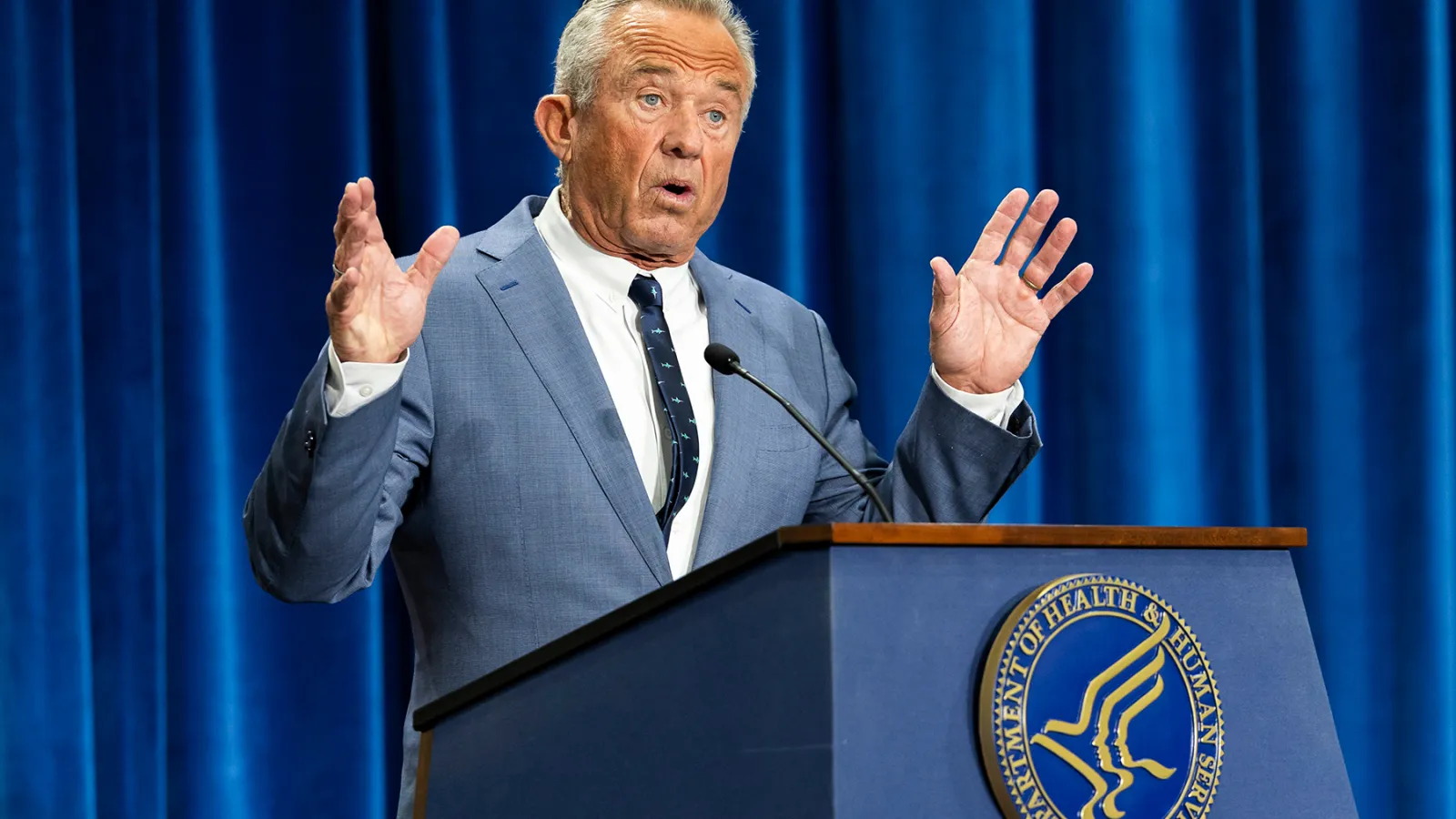
A Controversial Hepatitis B Vaccine Study Championed by RFK Jr. Is Axed After Widespread Backlash
After a global outcry over ethics, a from a U.S. congressional committee, resignations from a Danish ethics board, and sustained reporting from Rolling Stone and other news outlets, a hepatitis B vaccine clinical trial in Guinea-Bissau that was championed by Health Secretary Robert F. Kennedy Jr., and was to be funded by the Centers for Disease Control and Prevention, will “not proceed,” one of the Danish researchers announced Wednesday on LinkedIn.
Read more Trump to America: I’ll Only Do My Job if Republicans Win
The study failed to get the “necessary government approval” from Guinea-Bissau health authorities, the researcher Frederik Schaltz-Buchholzer wrote.
The trial, which would have provided a lifesaving hepatitis B vaccine birth dose to only half of 14,000 newborns enrolled in the study, despite almost one in five adults in Guinea-Bissau being infected with the disease, led public health experts to liken it to the infamous 40-year Tuskegee study, which withheld syphilis treatment from African-American study subjects.
The lead Danish researchers, Christine Stabell Benn and Peter Aaby at the University of Southern Denmark, long lauded by Kennedy for their research into the non-specific and possibly harmful effects of vaccines, persistently rejected that criticism. As recently as October 17, they argued that no child would be deprived of a vaccine they would otherwise get, as the hepatitis B birth dose won’t become standard in Guinea-Bissau until 2028: “In fact, the study expands access to hepatitis B vaccine while it is not yet part of the national program,” they wrote. “This is quite different from the frequently repeated suggestion that the trial takes vaccines away from children”
The protocol, which they revised in August after WHO criticism, would screen prospective mothers for hepatitis B, provide vaccine doses for all participants starting at six weeks of age, and was conceived independently of Kennedy, they emphasized. But it would still leave newborns at risk of infection that could lead to lifelong consequences of cirrhosis or liver cancer, hepatitis B experts say.
Internal CDC emails first reported by Rolling Stone in January showed that the Guinea-Bissau study was a “funding priority” for Kennedy’s allies inside CDC. They pushed through the study as a no-bid contract, sparking alarm within the agency. As well, the study never underwent a full review by a CDC ethics board, a time-consuming but customary process, designed to protect human subjects.
Critics feared Kennedy would use the study to help support his efforts to end the hepatitis B vaccine birth dose in the United States, despite being proven safe and effective for decades. Just last week, the World Health Organization stated that even with a revised protocol, the study remained unethical, Rolling Stone was first to report.
By the time the Guinea-Bissau government refused to greenlight it this week, the study became a symbol of cratered medical ethics and misuse of funds by Kennedy’s CDC. “The overreach by Secretary Kennedy and CDC political leaders to use CDC funding for a project with no scientific merit that could result in harm and delayed treatment of children should be reviewed by Congress,” says the CDC’s former chief medical officer Dr. Debra Houry. “Use of these scarce federal funds should be focused on health threats as intended.”
Read more Trump’s Russia Envoy Praises Putin as a Great ‘Humanitarian’
In February, Rolling Stone reported on revelations about irregularities in the Guinea-Bissau ethics review, including a signature on an approval letter used without the knowledge or consent of the named medical official, which led the University of Southern Denmark to halt the trial.
But on October 7, the study had been resurrected and was to be funded with CDC money designated by Congress for global health security. A budget deadline had driven the CDC’s scramble for funds, and led an ethics committee at the University of Southern Denmark, where the researchers are based, to rush its review.
All along, the study has been dogged by scrutiny over its reliance on a single ethics review panel in Guinea-Bissau and the omission of a full CDC ethics review. A loophole in Danish law meant that because of the overseas ethics review in Guinea-Bissau, the country’s national and regional committees could not review it separately.
After trying unsuccessfully to get the WHO or another European ethics committee to conduct an independent review, the University of Southern Denmark conducted its own, with a vote so hastily scheduled that committee members opposed to approval were not in attendance.
On October 12, amid questions from Rolling Stone about this regulatory shortcoming, the Rector of the University of Southern Denmark, Jens Ringsmose, wrote to the Danish Minister of Health, to raise the question of “whether the Minister will consider whether the principle of the Declaration of Helsinki should be reflected in Danish legislation,” to ensure that research protocols should be reviewed by both sponsor and host countries.
On Wednesday, the researcher Frederik Schaltz-Buchholzer wrote, “In the Anglophone media, our proposed investigator-initiated trial was wrongly framed as ‘Kennedy’s trial.’” He described the study as “the most noble and valuable I have ever been involved in.”
To medical ethicists, the study stood out as both ethically and scientifically compromised from the very beginning. “My worry was, they were using the study and the infants in Guinea-Bissau, for their own ends,” says Seema Shah, bioethicist at the Lurie Children’s Hospital in Chicago. “If you’re not looking at the benefit of preventing hepatitis B, you’re looking for one half of the story and omitting the other half.”
Read more The Nuclear Threat Is Roaring Back, Thanks in Part to Donald Trump
