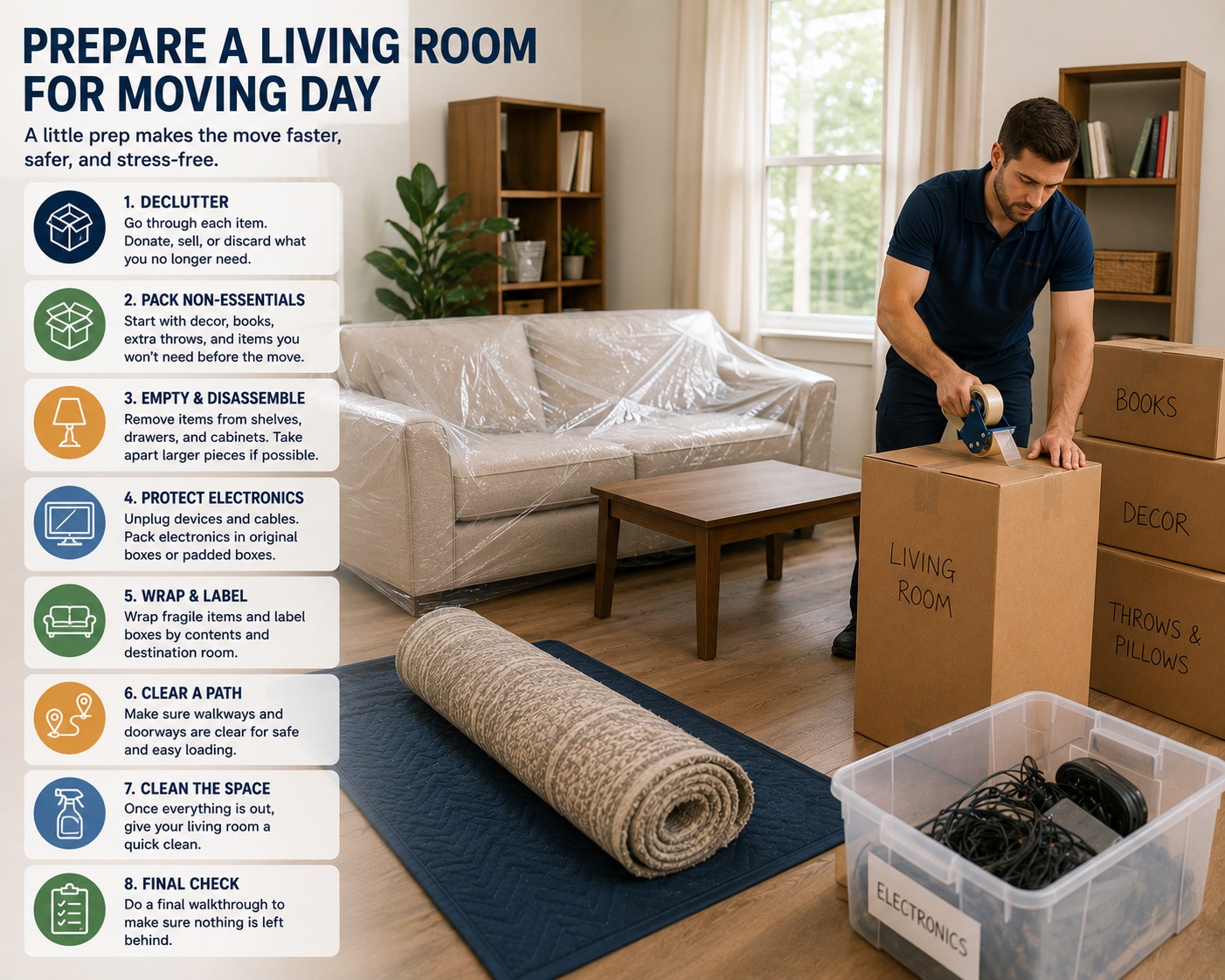
Give Your Living Room a Head Start Before the Movers Arrive
The living room is often the busiest space in a home, which makes it one of the easiest rooms to underestimate during a relocation. Sofas have to be maneuvered through doorways, entertainment equipment contains delicate components, and shelves tend to accumulate far more small belongings than expected. Preparing the room ahead of time can make moving day noticeably calmer.
For households planning a Las Vegas relocation, nevada movers can assist with the physical work, while homeowners can focus on getting the living room ready for an efficient departure.
Clear the Room in Stages
Waiting until moving morning to start clearing the living room creates unnecessary congestion. Begin several days ahead by removing decorations, small electronics, books, plants, and other loose belongings.
Place these items into clearly labeled boxes according to where they will go in the new home. Keeping smaller possessions contained gives the moving crew more room to handle bulky furniture.
Create a Separate Essentials Box
Keep chargers, remote controls, medications, documents, keys, and other items you may need immediately after the move somewhere accessible. Do not bury these belongings inside a general living-room carton.
Give the Sofa a Proper Preparation
A sofa may be one of the largest objects in the room, but its preparation depends heavily on its construction. Remove detachable cushions and store them together.
Check whether the legs can be removed safely. If they can, place the hardware in a labeled bag and keep it with the sofa components.
Measure the sofa and compare its dimensions with doorways, hallway corners, staircases, and the route to the truck. A few minutes spent measuring can reveal a tight turn before anyone attempts to carry the furniture through it.
Protect Electronics Before Disconnecting Them
Televisions, speakers, gaming systems, streaming devices, and other electronics should be prepared separately from ordinary household belongings.
Take photographs of cable connections before disconnecting complicated setups. Label cables that could easily become confused and keep small accessories together.
The television should receive appropriate protection for transportation. Avoid placing heavy boxes on top of electronic equipment, and keep loose components from rubbing against screens or delicate surfaces.
Empty Shelves and Cabinets Completely
Bookcases, entertainment centers, display cabinets, and side tables should be cleared before they are moved. Even lightweight objects can become dangerous when they shift during carrying.
Pack books in manageable boxes rather than creating cartons that are too heavy to lift safely. Wrap decorative objects individually and give fragile pieces their own protective space.
For furniture with removable shelves or glass components, separate those pieces when practical and protect them independently.
Prepare Rugs and Floor Décor
Area rugs should be cleaned and completely dry before being rolled for transportation. Secure them so they cannot unroll while being carried.
Remove floor lamps, plants, baskets, ottomans, and decorative stands from the walking route. If the living room contains artwork or mirrors, take them down before furniture starts moving.
Keeping the floor clear creates a safer path and reduces the likelihood of furniture or belongings being knocked over.
Make the Carrying Route Obvious
Think of the living room as part of a transportation path rather than an isolated space. Remove obstacles from the route leading toward the exterior door.
Protect vulnerable walls or flooring when appropriate, particularly around narrow corners and entrances. Pets and children should also be kept away from active moving areas while furniture is being carried.
If the property has stairs, measure the tightest points and communicate any concerns before the crew begins.
Decide Where Major Pieces Will Go
Moving day becomes more efficient when the destination is already planned. Before the truck arrives, decide where the sofa, television, bookcases, and other large pieces should be positioned in the new home.
A simple sketch or room photograph can help communicate the arrangement. This reduces unnecessary repositioning after heavy furniture has already been unloaded.
Nevada Movers can support households with residential moving projects, including the handling of large household furnishings that require careful carrying and placement.
Keep Fragile Items Out of the Moving Flow
Some living-room belongings are better transported separately from heavy furniture. Collectibles, valuable artwork, delicate decorations, important documents, and small electronics should not be left where they can become buried beneath ordinary moving boxes.
Set aside these items in a clearly identified area before the moving crew arrives.
Residential moving becomes much easier when the most complicated room is prepared before the first piece of furniture leaves the house. By clearing loose belongings, protecting electronics, measuring large furniture, organizing fragile objects, and establishing a clear carrying route, homeowners can give nevada movers the space needed to work efficiently and help the living room leave the property without unnecessary delays.